
 English
Staying Hydrated through Winter
As the weather cools down, it may be more difficult to remember to stay hydrated. While there is often less water loss through sweating in the cooler months, water is still required for so many body functions, even in the winter. For example, with temperatures reaching below 0 °C in winter months, the air is much drier outdoors as well as indoors, where heating systems are running. This means we are getting less moisture from the air around us and needing to use the moisture from our own mucous membranes in our nose and lungs to moisten the air we are breathing. Luckily, there are so many great ways to stay hydrated even in the winter months!
Soups and Bone Broth
Soups are a great way to address hydration and nutrition in one meal. There are endless options for soups in winter months. Keep in mind that clearer soups with more water content would be more hydrating than pureed vegetable soups like pumpkin or butternut squash. That being said, both clear and pureed soups are wonderful ways to stay hydrated and nourished in winter months. If you are feeling adventurous, you could try making a bone-broth soup base to use in your soup recipes for some extra nutritional support, especially during cold-and-flu season. Did you know that bone broth contains amino acids like glutamine, histidine, and alanine? These can help support digestion and gut health,[1] and they serve as an antioxidant supporting brain health and immune health.[2]
Tea and Tisanes
In the colder months, you may find that you are craving warmth. A nice hot tea or tisane (herbal tea) can be a great way to satisfy that craving. Warming teas that have herbs like cinnamon, nutmeg, ginger, clove, or turmeric can be great for warming up during the cold months.
If you are someone who tends to run hot even in winter, you may want to go for teas that contain more cooling herbs like peppermint or dandelion.
Warm Lemon Water
Having warm lemon water first thing in the morning is a great way to rehydrate after a night of rest and a wonderful morning reminder to prioritize hydration throughout the day. The refreshing smell of lemon can help provide a little boost of energy first thing in the morning and be a good source of vitamin C and electrolytes in your water. To protect your tooth enamel with this slightly acidic drink (citric acid from the lemon), try drinking it with a straw.
Home Humidifier
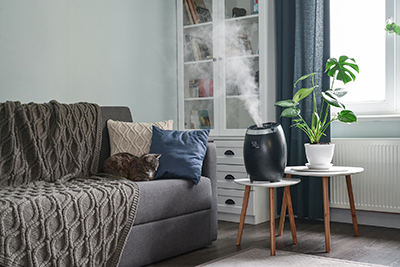
We talked about the air being drier in the winter. A great way to keep the air moist—at least inside the house—is to use a humidifier in winter months. You could even add essential oils for an extra lift during the winter. For example, you could add eucalyptus to help open airways and support the respiratory system. You could add lavender for a more calming scent. Many essential oils have also been shown to have some antimicrobial properties,[3] which is nice to have around during cold-and-flu season. Be sure to double check that your humidifier is equipped for diffusing essential oils before adding them in.
How Do I Know if I’m Getting Enough Water?
The skin can be a helpful indicator of hydration status. If your skin is dry or flaky, that may be a sign to drink more water. Keeping your skin covered when going outside in cold, windy weather is a great way to help prevent dryness. A scarf around the nose and mouth can also help prevent mucous membranes from drying out in the cold wind.
Digestion and bowel movements can be another important indicator of hydration status. If you are finding your bowel movements are less regular, less smooth, or harder to pass during the winter months, this may be an indication to drink more water.
And, of course, there is urination. If you are noticing smaller amounts of urine or urine that is dark yellow, this may be an indication to drink more water.

Mood and energy can be another indicator of not getting enough water. If you are feeling more tired than usual, pay attention to how much water you are drinking and whether there are any of the other signs we talked about, like dry skin or constipation.
Keep in mind that the fluid needs of each individual are different and depend on several factors like activity level and weight. The best way to ensure you are getting enough water is to mindfully listen to your body for thirst cues. If you are noticing signs of not getting enough water but feel like you are drinking enough, it may be a good time to check in with your naturopathic doctor to better understand what your hydration needs are, whether added electrolyte support would be helpful, or to understand if something else is going on.

Dr. Felicia Assenza, HBSc, ND
A Hamilton-based naturopathic doctor whose goal in every patient visit is to share the knowledge and experiences that she gained on her own journey.
drfeliciaassenzand.com
References
[1] Zhou, Q., M.L. Verne, J.Z. Fields, J.J. Lefante, S. Basra, H. Salameh, and G.N. Verne. “Randomised placebo-controlled trial of dietary glutamine supplements for postinfectious irritable bowel syndrome.” Gut 68, no. 6 (2019): 996–1002.
[2] Jukić, I., N. Kolobarić, A. Stupin, A. Matić, N. Kozina, Z. Mihaljević, M. Mihalj, et al. “Carnosine, small but mighty-prospect of use as functional ingredient for functional food formulation.” Antioxidants 10, no. 7 (2021): 1037.
[3] Wińska, K., W. Mączka, J. Łyczko, M. Grabarczyk, A. Czubaszek, and A. Szumny. “Essential oils as antimicrobial agents—Myth or real alternative?” Molecules 24, no. 11 (2019): 2130.
