

 English
Power of Protein
Protein plays a role in almost every system in your body—from energy and metabolism to mood, immune function, hormone production, and muscle repair. It also plays an important role in balancing blood sugar and supporting your energy levels throughout the day. Despite knowing the importance of protein, many of us still struggle to get enough.
Why Does Protein Matter?
- Helps to build and maintain muscle mass
- Works to repair tissues (including your muscle tissue)
- Supports immune health and functioning
- Works to produce hormones and enzymes
- Helps to keep you fuller longer and reduces cravings
- Helps to provide a steady supply of energy and supports balanced blood sugar levels
- Supports the overall health of skin, hair, nails, and connective tissue
Signs That You Might Not Be Getting Enough Protein
- Sugar cravings
- Afternoon crashes or fatigue throughout the day
- Difficulty changing your body composition (not able to build or maintain muscle mass)
- Slower recovery from illness or workouts
- Hair loss
- Brittle nails
- Blood-sugar fluctuations
Fun Fact #1: Did you know that your immune system is made of proteins? The antibodies and enzymes that support your immune system are all made of proteins. When your body is sick or stressed, it requires more protein to support recovery.
How Much Protein Do You Need?
Protein intake is very specific to the individual and needs vary based on sex, age, weight, height, and activity level.
The Canadian recommended dietary allowance (RDA) is 0.8 g of protein per kilogram body weight. I want to emphasize that this recommended intake is the minimum needed to avoid deficiency: it does not necessarily reflect optimal protein levels that are needed to achieve your personal health and fitness goals. Research suggests that most people function optimally and feel better with protein intakes ranging between 1.2 and 1.6 g/kg, [1], [2], [3] especially when wanting to support muscle mass, healthy aging, metabolism, and appetite control.
Fun Fact #2: Did you know that muscle is metabolically active tissue? This means that the more muscle you maintain, the more calories your body will burn at rest. This makes it easier to maintain your weight as you age.
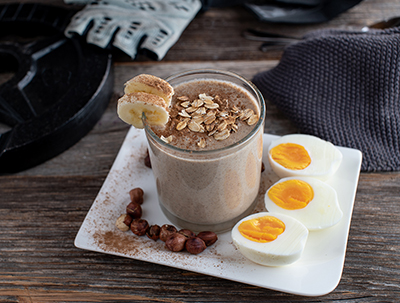
Practical Ways to Get More Protein into Your Daily Diet
Start Your Day with Protein. This simple strategy will help set you up for the rest of your day. It works to reduce cravings, keep you full longer, stabilize energy levels, and helps you hit your overall protein target for the day. You can achieve this by incorporating protein-rich foods to your breakfast. Consider foods like eggs, turkey bacon, cottage cheese, Greek yogurt, nut butters, and protein supplements like a protein powder. It’s also perfectly acceptable to include high-protein foods that aren’t typically consumed at breakfast: foods like chicken, turkey, fish, and legumes, for example.
Add at Least One Source of Protein to Every Meal. It’s a good idea to aim for at least 20–30 g of protein at each meal. This helps ensure that you are getting enough protein. Research shows that spreading protein intake is best for optimizing muscle mass gains and recovery.[4]
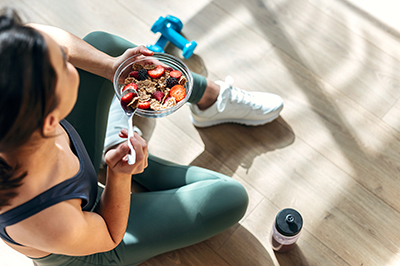
Try Adding One Protein “Add-on” to Each Meal. Think of this as your protein boost—an additional small source of protein that isn’t the main source of protein in your meal. For example, adding hemp seeds to your Greek yogurt, nut butter to your protein smoothie, or pumpkin seeds to your chicken salad bowl. It could also be as simple as adding collagen protein to your coffee, tea, or soup (any warm beverage).
Batch Cook 1–2 Protein Sources for the Week. This could be slow-cooked shredded chicken, roasted chicken, baked salmon, baked tofu, meatballs, etc. When you prep protein in advance, they can be used across meals in things like bowls, wraps, salads, soups, etc.
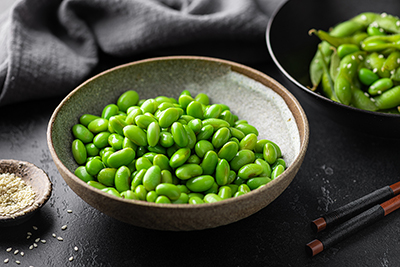
Add Protein to Your Snacks. You can also eat small amounts of protein throughout the day. Think of adding some of these to your snack roster: hard-boiled eggs, chia seeds (think chia pudding!), roasted or steamed edamame beans, roasted chickpeas, lentils or other legumes, Greek yogurt, cottage cheese, hummus, bean dips, and bone broth.
Getting enough protein in your diet can be a simple and effective way to support steady energy levels, muscle health, metabolism, and healthy aging. You can support your health daily by making small shifts to meals to include more protein. If you aren’t sure where to start, I suggest starting with breakfast. Beginning your day with 20–30 g of protein will set the tone for the rest of the day. When doing this consistently, you should see better energy levels, fewer cravings, and more balanced meals.
Fun Fact #3: Did you know that protein is the most satisfying macronutrient, meaning it helps keep you feeling full longer after you’ve finished your meal. In fact, research shows that eating a high-protein breakfast can help reduce your appetite later in the day [5] (and this often means less afternoon sugar cravings too).

Angela Wallace, BSc, MSc, RDN
Angela is a registered dietitian, family food expert, and personal trainer with a passion for helping women and kids thrive through better nutrition. She specializes in weight management and digestive health.
eatrightfeelright.ca
References
[1] I. Ishaq, S. Noreen, P.M. Aja, and A.V. Atoki. “Role of protein intake in maintaining muscle mass composition among elderly females suffering from sarcopenia.” Frontiers in Nutrition 12 (2025): 1547325.
[2] C. Putra, N. Konow, M. Gage, C.G. York, and K.M. Mangano. “Protein source and muscle health in older adults: A literature review.” Nutrients 13, no. 3 (2021): 743.
[3] W.W. Campbell, N.E.P. Deutz, E. Volpi, and C.M. Apovian. “Nutritional interventions: Dietary protein needs and influences on skeletal muscle of older adults.” The Journals of Gerontology. Series A: Biological Sciences and Medical Sciences 78, suppl. 1 (2023): 67–72.
[4] T. Stokes, A.J. Hector, R.W. Morton, C. McGlory, and S.M. Phillips. “Recent perspectives regarding the role of dietary protein for the promotion of muscle hypertrophy with resistance exercise training.” Nutrients 10, no. 2 (2018): 180.
[5] B. Kung, G.H. Anderson, S. Paré, A.J. Tucker, S. Vien, A.J. Wright, and H.D. Goff. “Effect of milk protein intake and casein-to-whey ratio in breakfast meals on postprandial glucose, satiety ratings, and subsequent meal intake.” Journal of Dairy Science 101, no. 10 (2018): 8688–8701.
