

 English
Healthy Aging: Oxymoron or Opportunity? Part 2
In “Healthy Aging… Part I” (Flourish, autumn 2025), we considered the impact of aging on our joints, muscles, and skeletal system as well as the changes we could expect to our cardiovascular and digestive systems.
In this second part, we’ll focus on the metabolic and hormonal changes that occur as we get older, along with the effect aging has on our immune, endocrine, and nervous systems. We’ll also explore how even small lifestyle hacks can play a big part in maintaining health and independence in our sunset years.
| System | What Changes with Age | Risks | Helpful Habits |
| Metabolism | Slows down | Weight gain, metabolic syndrome | Daily movement, balanced diet |
| Endocrine | Lower hormones (testosterone, GH, DHEA) | Sarcopenia, obesity, diabetes | Strength training, protein intake |
| Immune | Immunosenescence, inflammaging | Infections, cancer, weaker vaccine response | Sleep, stress management, vaccines |
| Nervous | Brain shrinkage, slower neuron signalling | Memory issues, dementia | Mental/physical activity, BP control |
Metabolism
Remember when you were younger and there was always at least one person in your group of friends who could eat as much or as often as he or she wanted, do nary a stitch of exercise, and still stay as thin as a string bean?
There’s a good chance they had a higher metabolism than most, which means they converted what they ate (including junk food!) into energy more quickly than the rest of us. Eventually, though, everyone’s metabolism trends in the same direction—down. And since what our bodies don’t convert to energy, they store in our fat cells, the result is fat accumulation and weight gain.
Those additional pounds, combined with a habitual decline in physical activity as we age, eventually give rise to excess abdominal weight, high blood triglycerides, elevated blood-sugar levels, high blood pressure, and low HDL cholesterol. A person with three or more of these conditions meets the criteria for metabolic syndrome, which affects nearly half of Americans over the age of 60 and almost 40% of seniors in Canada. This cluster of conditions can, if unaddressed, significantly increase our risk of cardiovascular disease, including heart attacks, strokes, type 2 diabetes, and cancer.
Endocrine System
As we get older, our endocrine system (the glands that secrete hormones) produces less testosterone, growth hormone, and dehydroepiandrosterone (DHEA). The outcome is a snowball of metabolic change.
The reduction in hormones, along with our habitual decrease in physical activity, results in lower daily energy expenditure, which in turn increases our risk for obesity and accelerates the normal loss of muscle mass that occurs with age. This combination of sarcopenia (loss of muscle mass and strength) and obesity can be devastating for older populations by making them vulnerable to falls and fractures and increasing their risk for developing diabetes, cardiovascular disease, and dementia.
Yikes, you say! So, here’s the silver lining. Studies show that even small, everyday bursts of physical activity can significantly improve your chances of celebrating another birthday. And by burning more calories, you can help reduce excess weight, which in turn promotes a greater range of movement, builds strength, and allows you to further increase your activity levels. Another snowball effect—but this time, a healthy kind.

Immune System
As we age, the immune system, like our metabolism and endocrine system, goes through a process of breaking down faster than the rate at which our bodies can maintain it. This is called “immunosenescence,” a word made popular in the 1970s and derived from “immuno-,” relating to the immune system, and “senescence,” a process by which a cell ages and permanently stops dividing but does not die.
In fact, an accumulation of these dysfunctional cells, a decrease in production of new cells, and impaired communication between them are at the root of many of our unwelcome age-related changes. They include a greater susceptibility to infections like flu and pneumonia, an increased risk of developing cardiovascular and neurodegenerative diseases, a diminished response to vaccinations, and a greater likelihood of developing cancer.
Enter another relatively new addition to the medical lexicon: “inflammaging,” which means pretty much as it sounds. Coined in the year 2000, it describes the subtle, low-grade inflammation that is characteristic of getting older. But unlike the acute inflammation that can help repair damaged tissue or resolve an infection, inflammaging is chronic, which means it can last for months or even years. Also, because it’s systemic, this persistent and widespread complication can cause significant damage to cells and tissues throughout the body, including the cardiovascular system, kidneys, and brain.
So, what can we do to address some of these issues? The concept of boosting your immunity is an enticing one all right, but there is still so much we don’t know about how to effectively do that. What we do know is that lifestyle factors play an important role in modulating inflammation. Regular exercise has been shown to have long-term anti-inflammatory effects, while managing stress and getting adequate sleep can help to prevent the release of inflammatory stress hormones. And simple steps like washing your hands frequently and staying up to date on vaccines will help mitigate infections. It’s not surprising that much of this is stuff our parents told us way back when.
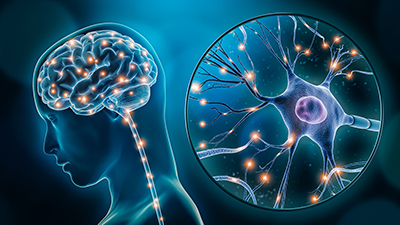
Nervous System
Our nervous system is like the command centre aboard the starship Enterprise. Made up of the brain, spinal cord, nerves, and sensory organs, the nervous system plays a role in almost everything we do. It directs us to breathe, see, eat, talk, and take out the trash. It regulates our thoughts and memories, senses our internal and external environment, controls our bodies’ movements, and regulates the endocrine system.
The nervous system consists of specialized cells called neurons that send messages, via nerves, back and forth from the brain throughout the body. As brain volume decreases with age, particularly in the frontal lobe and hippocampus (where memory and recall are processed), there are fewer connections between neurons, contributing to slower cognitive function.
As annoying as this mental slowdown can be, it’s very much a normal part of aging, and can encompass minor memory problems, trouble recalling words (nouns have become my Achilles heel), and more time and effort required to learn new things.
You can support your brain health as you get older and, at the same time, help prevent neurodegenerative diseases like Alzheimer’s by staying active physically and mentally; managing your weight and controlling your blood pressure; eating a healthy diet; moderating your alcohol consumption; and, if you’re a smoker, butting out for good. Perhaps the most important recommendation, though, is to enjoy life, whatever your age.
Look for Part III of Healthy Aging… in the spring issue of Flourish, where we’ll focus on the remarkable world of the sensory system and how to best protect these precious organs.
Healthy Aging Hacks
- Move daily (even short bursts)
- Eat nutrient-dense foods
- Prioritize sleep
- Manage stress
- Stay socially connected
- Keep vaccinations up to date
Further Reading
- [No author listed.] “What is metabolic syndrome?” National Heart, Lung, and Blood Institute, 2022‑05‑18, https://www.nhlbi.nih.gov/health/metabolic-syndrome.
- [No author listed.] “Metabolic syndrome.” Cleveland Clinic, 2023‑09‑13, https://my.clevelandclinic.org/health/diseases/10783-metabolic-syndrome.
- Zhang, K., Y. Ma, Y. Luo, Y. Song, G. Xiong, Y. Ma, X. Sun, and C. Kan. “Metabolic diseases and healthy aging: Identifying environmental and behavioral risk factors and promoting public health.” Frontiers in Public Health 11. https://doi.org/10.3389/fpubh.2023.1253506
- Hirode, G., and R.J. Wong. “Trends in the prevalence of metabolic syndrome in the United States, 2011–2016.” JAMA 323, no. 24 (2020): 2526–2528.
- [No author listed.] “Home page.” Metabolic Syndrome Canada, 2023, https://www.metabolicsyndromecanada.ca/.
- [No author listed.] “Book info.” Happy Hormones for Life, [no date mentioned], https://happyhormonesforlife.com/book-info/.
- Pataky, M.W., W.F. Young, and K.S. Nair. “Hormonal and metabolic changes of aging and the influence of lifestyle modifications.” Mayo Clinic Proceedings 96, no. 3 (2021): 788–814.
- Ahmadi, M.N., M. Hamer, J.M.R. Gill, M. Murphy, J.P. Sanders, A. Doherty, and E. Stamatakis. “Brief bouts of device-measured intermittent lifestyle physical activity and its association with major adverse cardiovascular events and mortality in people who do not exercise: A prospective cohort study.” The Lancet Public Health 8, no. 10 (2023): E800–E810.
- Ahmadi, M.N., P.J. Clare, P.T. Katzmarzyk, B. del Pozo Cruz, I.M. Lee, and E. Stamatakis. “Vigorous physical activity, incident heart disease, and cancer: How little is enough?” European Heart Journal 43, no. 46 (2022): 4801–4814.
- Stamatakis, E., M. Ahmadi, R.K. Biswas, B. del Pozo Cruz, C. Thøgersen‑Ntoumani, M.H. Murphy, A. Sabag, et al. “Device-measured vigorous intermittent lifestyle physical activity (VILPA) and major adverse cardiovascular events: Evidence of sex differences.” British Journal of Sports Medicine 59, no. 5 (2025): 316–324.
- [No author listed.] “Senescence.” National Cancer Institute. Dictionary of Cancer Terms, [no date mentioned], https://www.cancer.gov/publications/dictionaries/cancer-terms/def/senescence.
- Kirkwood, K.L. “Inflammaging.” Immunological Investigations 47, no. 8 (2018): 770–773.
- Lavin, K.M., R.K. Perkins, B. Jemiolo, U. Raue, S.W. Trappe, and T.A. Trappe. “Effects of aging and lifelong aerobic exercise on basal and exercise-induced inflammation.” Journal of Applied Physiology 128, no. 1 (2019): 87–99.
- [No author listed.] “How to boost your immune system.” Harvard Health Publishing, [no date mentioned], https://www.health.harvard.edu/staying-healthy/how-to-boost-your-immune-system.
- Bick, J. “Exploring the intricate link between inflammation and aging.” Incite Health, [no date mentioned], https://incitehealth.com/exploring-the-intricate-link-between-inflammation-and-aging/.
- [No author listed.] “Nervous system.” Cleveland Clinic, 2023‑11‑16, https://my.clevelandclinic.org/health/body/21202-nervous-system.
- [No author listed.] “Changes that occur to the aging brain.” Columbia University Mailman School of Public Health, 2021‑06‑10, https://www.publichealth.columbia.edu/news/changes-occur-aging-brain-what-happens-when-we-get-older.

Dale Drewery
- Dale Drewery is coauthor of BioDiet: The Scientifically Proven, Ketogenic Way to Lose Weight and Improve Your Health. She is an award-winning journalist and writer with a keen interest in science and human health.
- biodiet.org
