

 English

Health Conditions & Body Systems
7 min read
Male Fertility: Supporting Sperm Health
Male Fertility: Supporting Sperm Health
When you consider the evident link between the excessive consumption of sugars and carbohydrates to the epidemic of obesity and diabetes that afflicts our society, the need for noncaloric sweeteners is self-explanatory. The logic is that by reducing the consumption of sugar, a decrease in excess weight should follow. As presented in the article “Les produits « sans sucre » feraient engraisser” (Sugar-Free Products Make You Gain Weight http://www.jydionne.com/les-produits-sans-sucre-feraient-engraisser),[1] substituting sugar for synthetic sweeteners does not produce the desired results. But what about stevia?
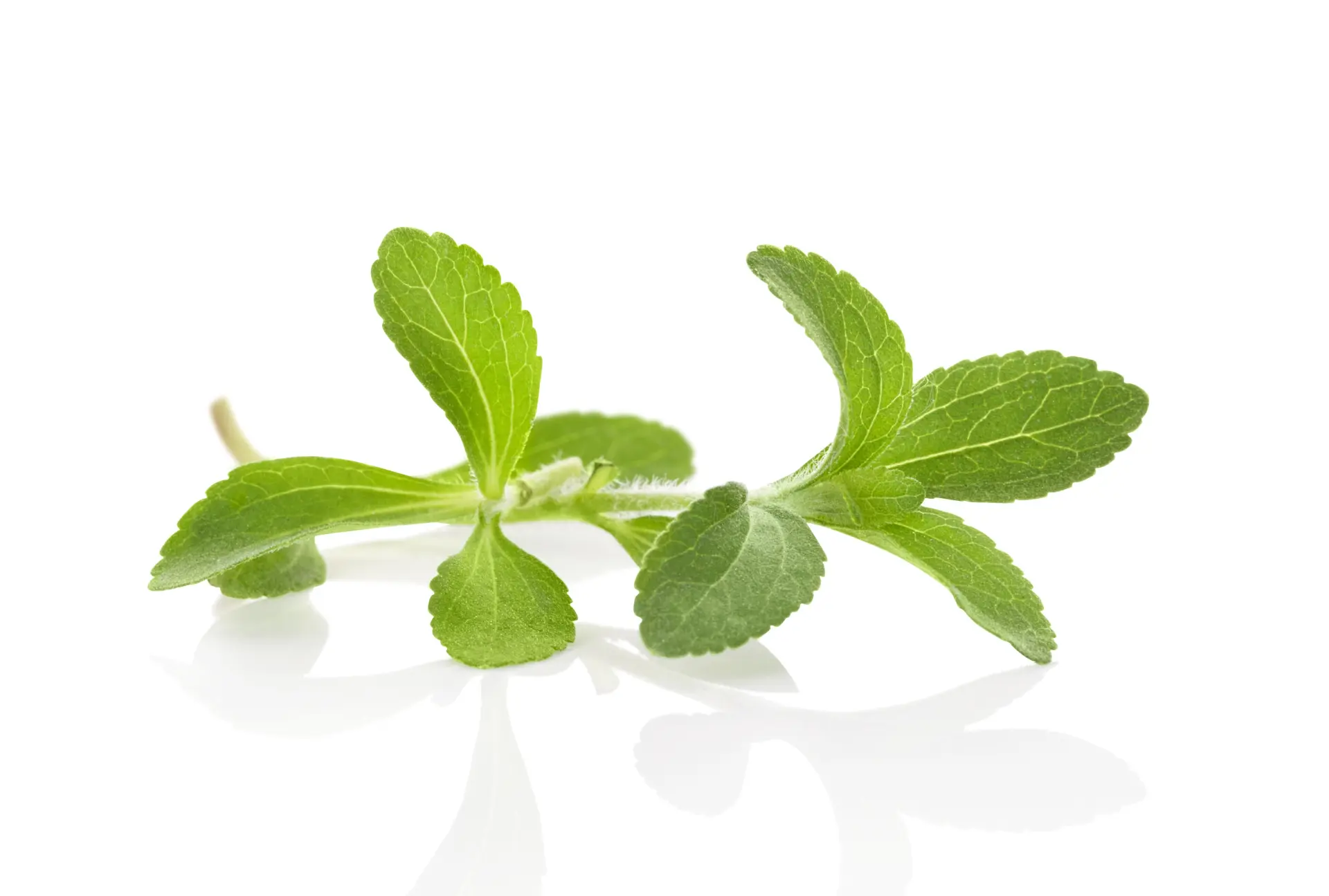
Stevia is a plant originally from Central and South America that belongs to the Asteraceae family; the same family as the daisy and echinacea. It has been used since ancient times to sweeten drinks and foods.
Stevia was identified by the botanist Moises Santiago Bertoni in Paraguay in 1899, hence its Latin name Stevia rebaudiana Bertoni. The first study that isolated and identified steviosides (particularly rebaudioside A) dates back to 1931, in France.
The sweetening effect of stevia, more specifically steviosides, has been known since the beginning of the twentieth century, and even way before that, given its traditional use. The Japanese were the first to work on the development of a noncaloric sweetener from stevia. Stevia was approved in Japan in 1970; at that time, Japanese regulations prohibited the use of synthetic sweeteners.
On this side of the ocean, it’s a whole different story. We are in the era of the cyclamate and saccharin craze. In 1965, aspartame was discovered. All the molecules are patented. The markets are huge… as are the lobbyists! Who would profit from a natural and nonpatentable sweetening agent arriving on the market? (This would not be the first time that special interests are leading the political agenda.)
Next comes the controversy over the safety of stevia. According to the people against its market entry, stevia in all its form is dangerous for our health!
 Offensive Research
During 1968, in the Journal of Science, researchers reported that a decoction of stevia affects the fertility of rats over a period of up to 60 days after the decoction was stopped.[2] However, after further examination, the methodology (concentration of the extract and identity of the plant) was not perfect.
A study from 1989 demonstrates that the consumption of stevia extract may have an effect on the fertility of rats, but that this effect is uncertain and certainly does not apply to males.[3]
Another study shows that consumption of stevia extract by male rats results in decreased testosterone, decreased sperm fructose content, and decreased fertility.[4]
In short, this was the in vivo studies’ offensive. Therefore, the sale of stevia was prohibited in the United States, and consequently in Canada.
Over time, the position of the authorities changed: In the mid-1990s, the ban on extracts was maintained, but the sale of the plant as a whole was permitted. Stevia was therefore found amidst the world of natural products. It should be noted that the plant itself has a very pronounced sweet taste: It has between 45 and 300 times the sweetening power of sugar, depending on the season and the concentration of active ingredients.
Currently, with the rise against aspartame in the population, the industry giants of “unhealthy food” (Coca-Cola and PepsiCo) need to find a solution to improve their image and maintain sales. Hence, we have started to see studies and other research confirm the traditional safety of stevia and its purified compounds.[5][6][7][8] Governments are now under pressure to approve stevia and its derivatives.
Therefore, we have seen stevia appear in various countries. In Canada, the use of the plant was officially approved in 2004; beforehand, it was not prohibited as a natural health product (NHP), since there was no regulation. In the United States, the use of stevia in a dietary supplement has been permitted—or finally, not prohibited—since 1995.
Regarding extracts, it was not until 2008 that purified rebaudioside A became available and approved in the United States, Russia, Switzerland, Australia, and New Zealand. In 2009, it was France’s turn to approve it. In Canada, regulations for rebaudioside A were approved in September 2009.[9]
Stevia has long been used by indigenous populations in Central and South America; has it reduced the fertility of these populations? It appears not!
Since stevia is part of the Asteraceae family (daisy, ragweed, etc.), the risk of allergies should be taken in consideration. However, the part used as a sweetening agent is the leaf, not the flower. Researchers who evaluated this possibility concluded that the risk of allergy is virtually nil and does not warrant a warning.[10] Moreover, when a purified fraction or steviosides is used, the risk is completely absent.
Regarding the effect of stevia on microbiota, it is known that steviosides are used by Lactobacilli and Bifidobacteria as a source of nutrients. This correlation is not strong enough to claim that stevia has a prebiotic effect (which increases the population of good bacteria in the intestine). In contrast, this assures us that it has no deleterious effect on the intestinal microflora.[11]
 The history of stevia and its active principles is one of vested interests, lobbies, and big profits. When the industry giants were not interested, it was dangerous; now that they have an interest, it has become safe… But hasn’t it always been?
Available in French only
 Jean-Yves Dionne
 A pharmacist, trainer, clinical consultant, and scientific advisor in natural
health products. He also teaches at the Université de Montréal and at
Université Laval.
www.jydionne.com
Male Fertility: Supporting Sperm Health

“Gluten” has become a buzzword over the past several years, causing some confusion between what eating gluten-free means and who needs to be eating that way. Th...
For those who enjoy food, our stomach craves gastronomic pleasure like our heart yearns for love.[1] So, long live the festive end-of-year celebrations where we...
